Aare Gorge – Switzerland
Whenever I show you photos and share recommendations from the Bernese Oberland in Switzerland, dating back to what I call the “back when I could still walk” era, four other places come to mind besides Rosenlaui Glacier Gorge that I think everyone should see at least once.
Those are Blausee Nature Park, the St. Beatus Caves, Trümmelbach Falls, and Aare Gorge.
I don’t have a particularly entertaining story to tell about any of these four places. All I can say is that they’re all worth seeing at least once, because each is impressive in its own way.
Aare Gorge
It’s located between Meiringen and Innertkirch.
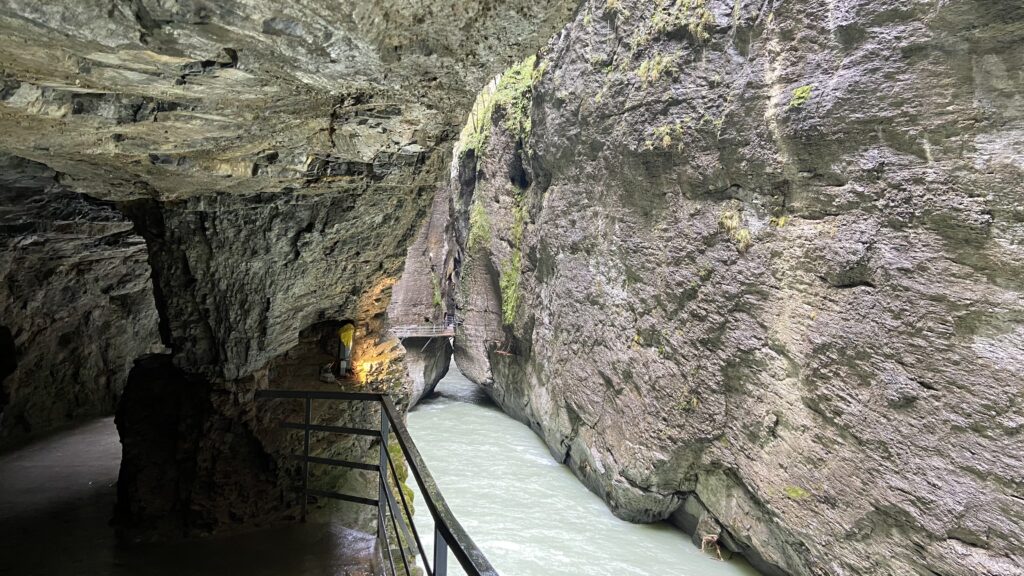
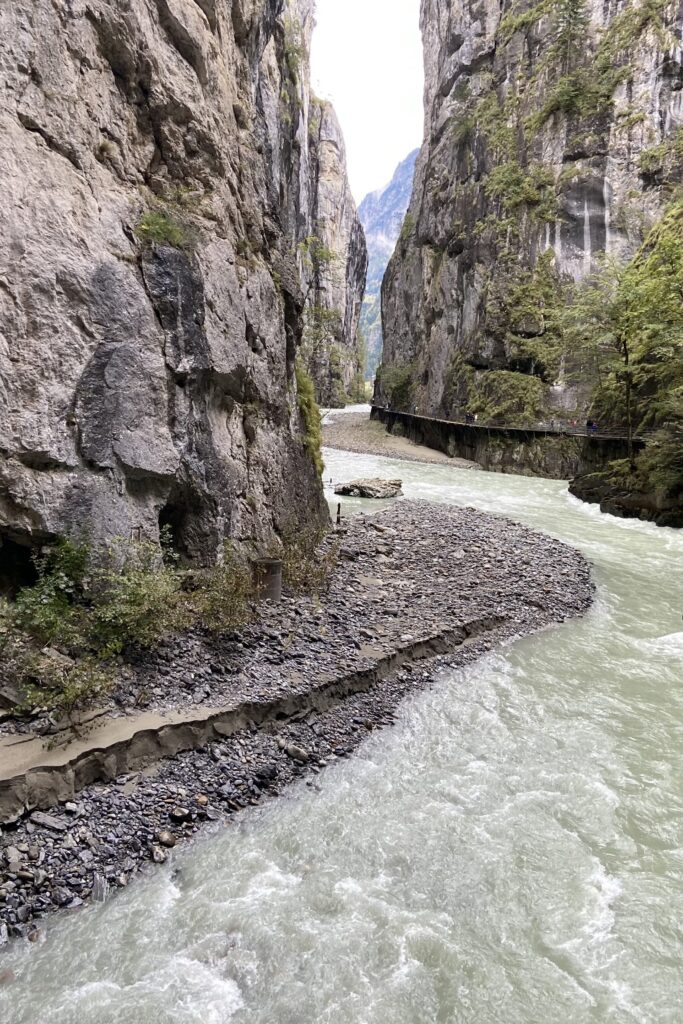
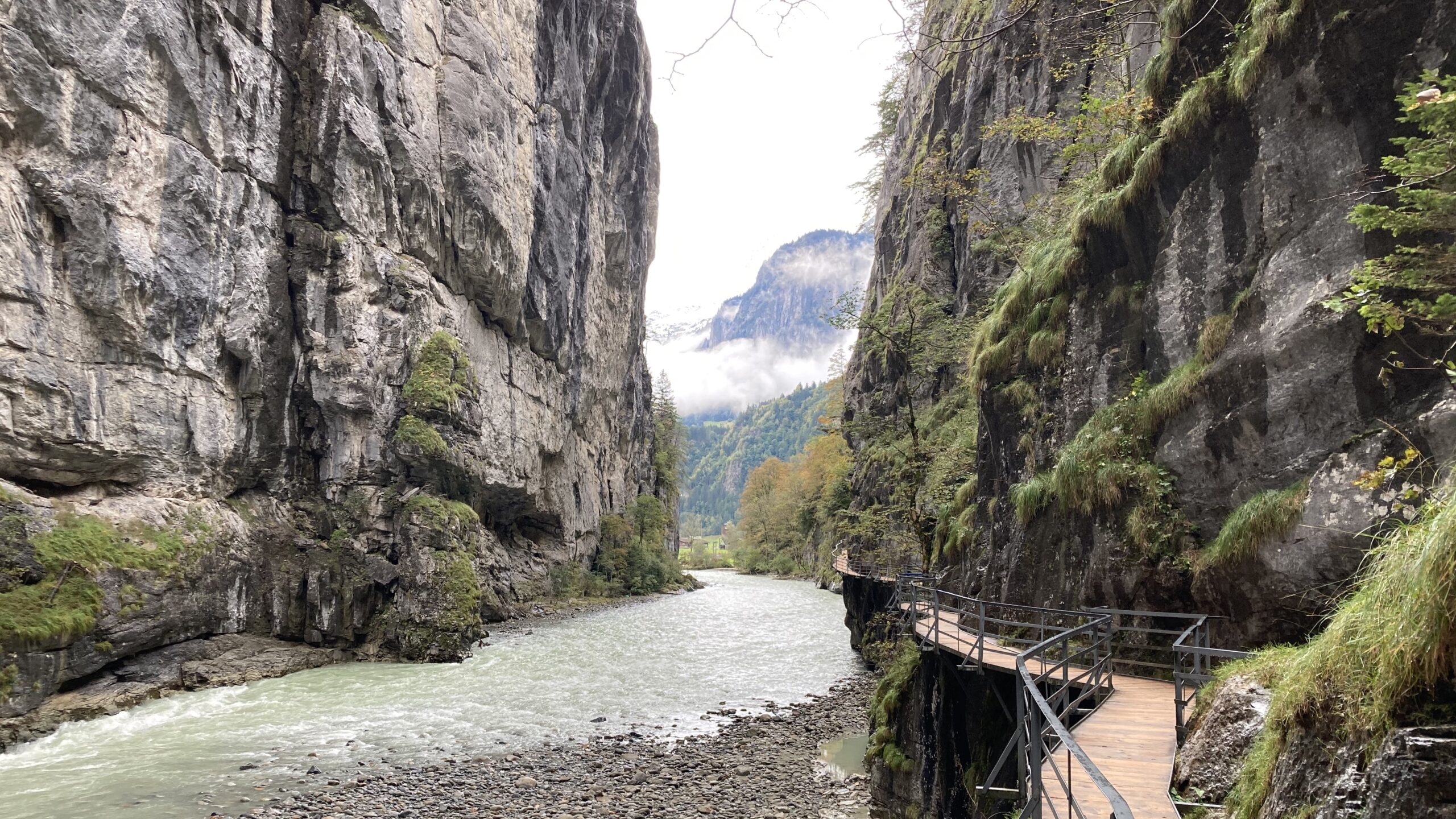
As a visitor, you walk through cool, damp rock tunnels and galleries, where water drips from the rocks. Every now and then, you find yourself walking along wooden walkways that are somehow attached directly to the rock walls. The Aare River flows beneath them.
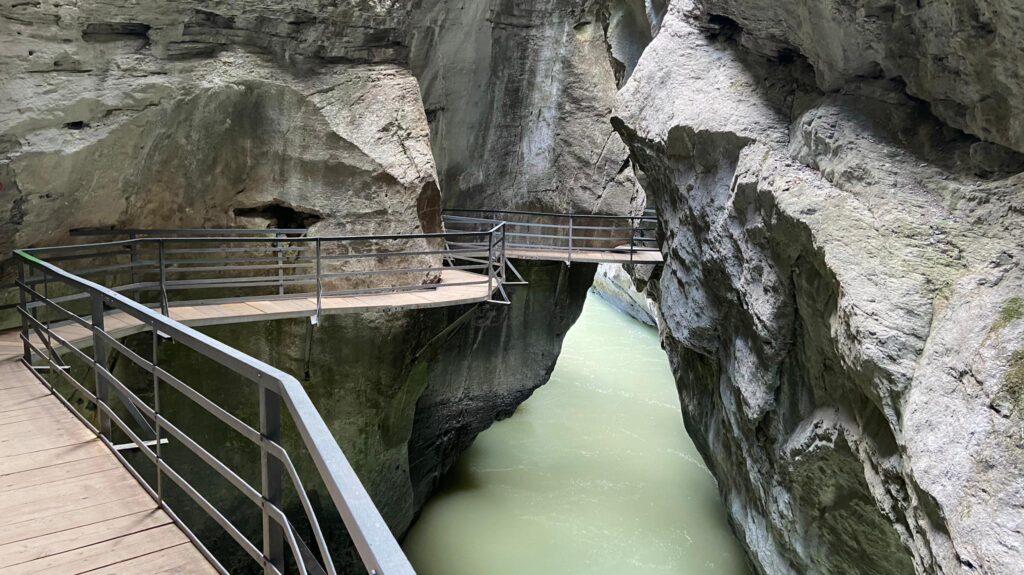
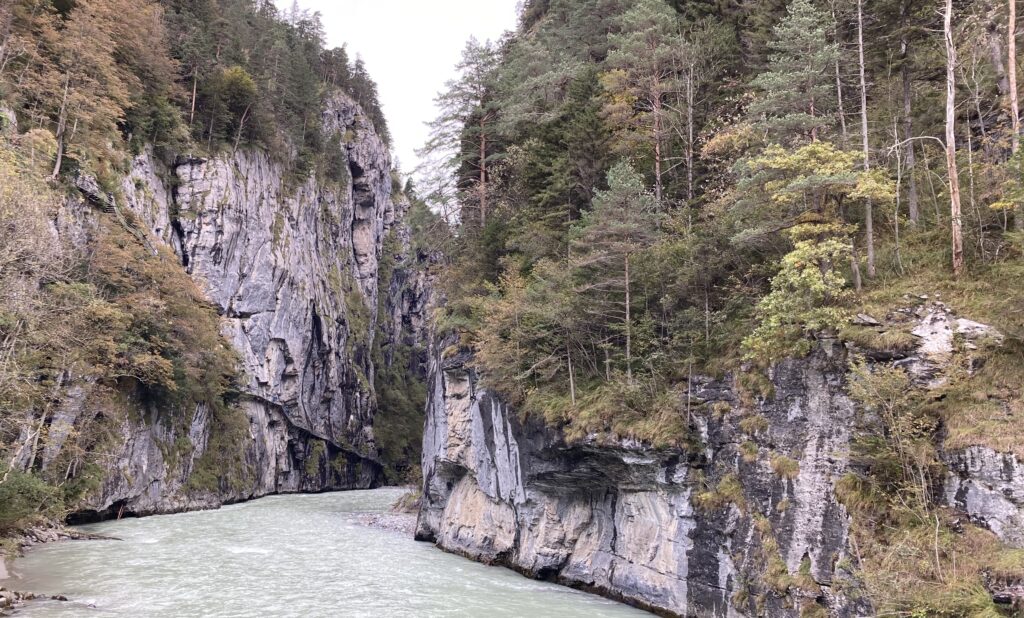
The water ranges from milky white to emerald green. Sometimes it flows quite peacefully, and sometimes it roars and thunders.
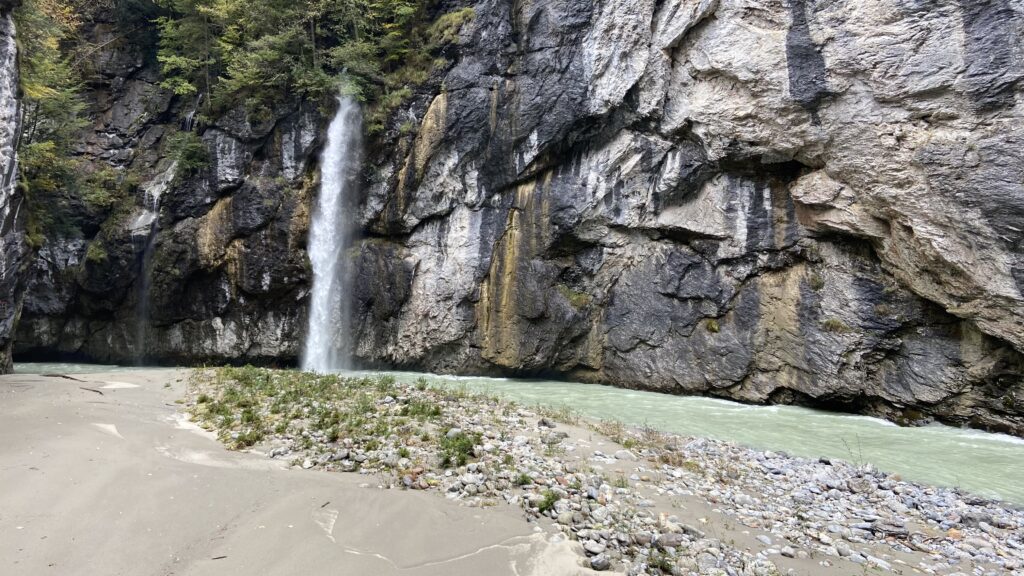
I’ve been lucky enough to walk this route several times, and I’d do it again if I could still walk properly.
A quick note: According to the operator’s website, the path from the western entrance near Meiringen to about the halfway point is suitable for narrower wheelchairs and strollers. However, when visitor numbers are high, access for wheelchairs and strollers may be restricted for safety reasons.
You can find more information on the official Aare Gorge website.
While doing a little research for this article, I started wondering what kind of things there might be that people don’t talk about quite so often. Because, well, “Aare” = “river” = “water” and “gorge” = “somehow rocky and narrow” is pretty obvious.
I actually found two things that I think are rather unusual.
Aare Gorge opened to visitors in 1888. As early as 1912, it was artificially illuminated. They even offered evening walks.
That didn’t last long. In 1914, during World War I, the lighting had to be dismantled because the materials were needed for national defense.
I also stumbled across the “Tatzelwurm Mystery.”
Which raises the question: “What on earth is a Tatzelwurm?”
Well, every region has its mysteries. The Tatzelwurm is probably the Swiss Alps’ answer to “Nessie” (Loch Ness, Scotland). It’s supposedly a dragon-like creature, about 50 to 80 centimeters (20–31 inches) long, also known as a “Stollenwurm.” According to legend, it lives in crevices in the rocks.
In the 1930s, a photographer claimed to have spotted and photographed a Tatzelwurm.
In 1935, his photo even appeared in the Berliner Illustrirte Zeitung, a German illustrated newspaper.
That made the Haslital almost a little famous. The newspaper sent staff members to search for the Tatzelwurm. A reward of 1,000 Reichsmarks was also offered to anyone who could catch a live one and hand it over to scientists for examination.
There were already doubts about the authenticity of the photo back then, though.
The photographer himself is probably the only one who knows the truth.
In any case, the Tatzelwurm was never found. And nobody ever collected the 1,000 Reichsmarks, either. The Haslital tourism authorities were pretty quick to distance themselves from the photographer’s claims.
Still, the Tatzelwurm managed to pull off something pretty cool: It became the mascot of Aare Gorge.
In 1998, an educational trail was created through the gorge. For that, an entire Tatzelwurm family was brought to life. Well, carved out of wood, anyway.
At the western entrance near Meiringen, children are greeted by wooden figures of Citronella and Tatzi. Along the way through the gorge, more members of the Tatzelwurm family are hiding: Mama and Papa Tatzelwurm, along with their three children, Titzi, Tetz, and Tatzi.